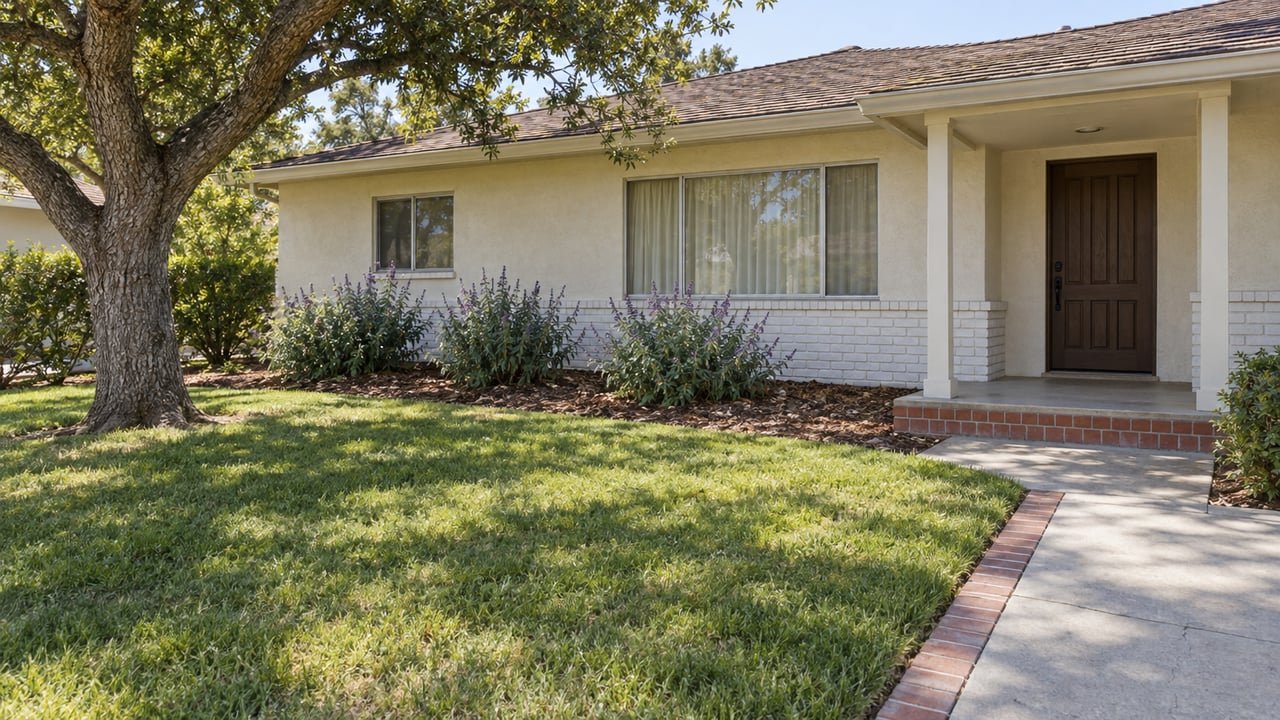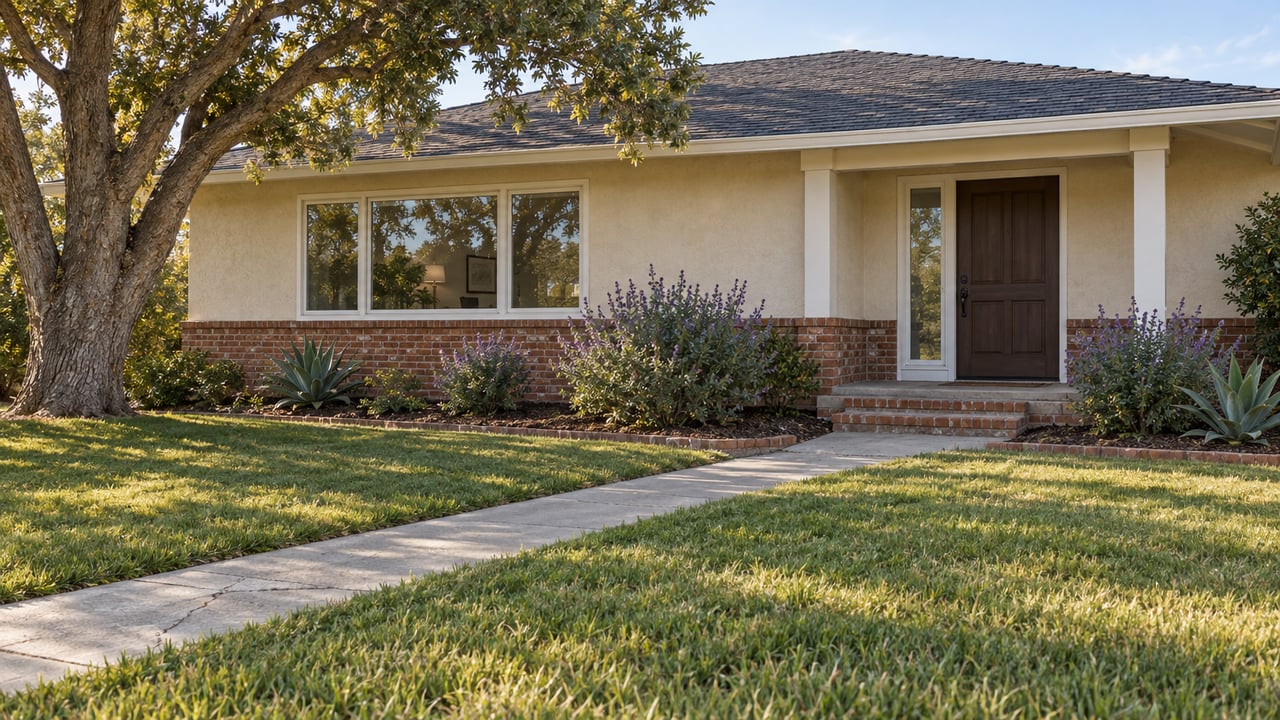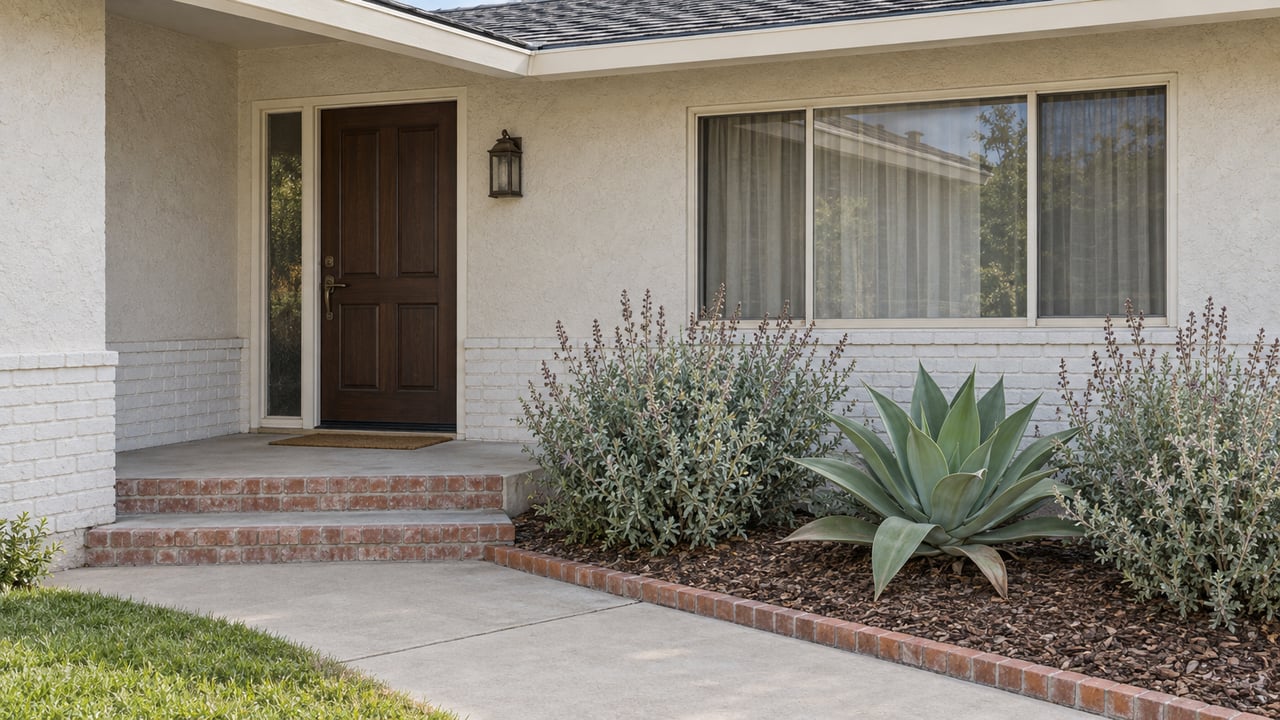
The monarch butterfly area at Orcutt Ranch Horticulture Center returned to the West Hills Neighborhood Council's agenda this fall. That happened just as the plants it depends on head into the time of year when they look least like a habitat. On October 20, the council's joint Board and Beautification Committee meeting listed an "Update on Orcutt Ranch monarch butterfly sanctuary" as item eight. It got there because the committee asked for it at its September 15 meeting, where the suggestion for October's agenda was to "Revisit the Monarch butterfly area at Orcutt Ranch."
If you walk the grounds at 23600 Roscoe Blvd. this month and find the milkweed brown, thin, or cut back, nothing has gone wrong. Native milkweed goes dormant in late fall, and the butterflies are spending the winter about 20 miles away on the coast. This dormant stretch is also when the council is taking up what the habitat should become.
A 2021 promise to the mayor's office
The project is older than most people walking past it would guess. In July 2021 the West Hills Neighborhood Council sent a letter to then-Mayor Eric Garcetti. It asked him to sign the National Wildlife Federation's Mayors' Monarch Pledge, and it made a specific claim about Orcutt Ranch:
"In West Hills, we have identified and mapped more than 4,000 existing native milkweed plants at Orcutt Ranch Horticultural Center. We want Orcutt Ranch to be designated as an official Monarch Butterfly Habitat. We believe this can be the largest such habitat in Los Angeles County."
The council's board authorized that letter by resolution on July 1, 2021. Planting followed. A milkweed seed planting went ahead at the ranch on September 18, 2021. Committee minutes from that month report that community member Christina Walsh had more seed to plant, and volunteers were invited back on the next two Saturdays to help.
The designation the letter asked for is a different matter. Neighborhood council records from 2026 describe a project that is still being followed up on. At the May 19, 2026 Beautification meeting, committee member Heidi Manning said she would contact Council District 12 for an update on "the Monarch butterfly sanctuary at Orcutt." In September, Glenn Jennings and Heidi Manning reported that they had contacted the Orcutt Ranch supervisor about a cleanup inside the park and had not heard back. Los Angeles Recreation and Parks runs the Horticulture Center, so any formal habitat status or volunteer work inside the grounds goes through the city.
The citywide pledge has a clearer record. The National Wildlife Federation's City of Los Angeles profile lists Mayor Karen Bass as a signatory in 2023, 2024 and 2025, most recently on March 26, 2025. The ask West Hills made in 2021 eventually happened at the city level, while the Orcutt-specific designation is still being followed up.
Why a bare milkweed patch in November is on schedule
The thousands of milkweed plants the council mapped only matter for part of the year, and that part is not November. The monarch calendar runs in two halves. The UC Master Gardeners of San Luis Obispo County lay it out this way, and it explains what you see at the ranch:
| Months | Where western monarchs are | What native milkweed is doing |
|---|---|---|
| October to February | Clustered in coastal groves, typically within 1.5 miles of the ocean, in a pause from breeding | Narrowleaf milkweed is winter deciduous; California milkweed is semi-deciduous |
| February | Leaving the coast and spreading inland across the West | California milkweed starts coming up early in spring |
| February/March to September | Breeding inland over several generations, laying eggs only on milkweed | Leafing out and flowering; narrowleaf blooms in summer and fall |
The Xerces Society describes native milkweeds in general as perennial and mostly deciduous. After the seeds disperse, the growth above ground dies back, and the plants stay dormant through winter before regrowing in spring. Xerces also groups California milkweed with the early-season species that resprout around March and April. Those plants feed the first generation of monarchs coming off the coast.
For Orcutt Ranch, that makes the timing work out neatly. Because the habitat's working season starts in early spring, a plan to clear, replant or sign the area would ideally be in place by the end of winter, while the plants are dormant. The committee's renewed attention in September and October came just ahead of that window.
What the same calendar means for milkweed in a West Hills yard
The guidance that applies to the ranch also applies to milkweed planted along a side yard on Valley Circle or behind a house off Roscoe. The main difference is which species is in the ground.
- Native milkweed should go dormant. Brown stalks on narrowleaf or California milkweed in November are expected.
- Tropical milkweed is the one to cut. Xerces says tropical milkweed that stays leafy in mild-winter areas can prompt egg-laying out of season and raise the spread of OE, a monarch parasite. It recommends planting only locally native milkweed and cutting existing tropical plants to the ground in early fall. UC Master Gardeners give November as the month to cut tropical milkweed to the ground, then keep it trimmed through winter.
- Distance from the coast matters. The same UC guidance says not to plant milkweed within five miles of the coast, where it does not grow naturally and can interfere with migration. West Hills sits well inland of that line.
- Fall nectar still counts. Fall-blooming nectar plants are what the butterflies need when they return to their winter sites in October.
Not every researcher ranks the tropical milkweed question equally. A UC ANR Bug Squad post reports UC Davis researcher Elizabeth Crone's view that tropical milkweed is not the first conservation concern. She puts native milkweeds, varied nectar plants and fewer pesticides higher on a gardener's list. That discussion centers on Northern California urban gardens. Xerces notes a related inland pattern. Inland Southern California has monarchs that stay all year, separate from the migratory population, and in winter they mainly rely on nonnative tropical milkweed and balloon plant. A monarch in a Valley garden in December is more likely one of those year-round residents than a migrant.
Where the butterflies are this month
To see monarchs in November, drive west. The nearest public overwintering site named in Xerces' visitor guide is Camino Real Park in Ventura. The guide warns that clusters can be sparse in low-population years. Volunteers counted 319 monarchs at Camino Real Park during the 2023 Thanksgiving count, which ran November 11 through December 3 that year.
Expect thin numbers. The Xerces Society reported on January 29, 2026 that the 2025 mid-season count found about 12,260 monarchs across 249 sites. That is the third-lowest total since the count began in 1997. Xerces gives late November through early December as the usual peak overwintering period. Xerces' map of overwintering sites also notes that some mapped groves are private or closed to the public, so confirm access before you go.
Those figures are why a dormant inland patch matters. Every butterfly in a Ventura grove this winter needs milkweed somewhere inland by spring to start the next generation. A site the neighborhood council once called potentially the largest monarch habitat in Los Angeles County would be in that spring supply.
The dates between now and spring
- November 14 to December 6: The 2026 Western Monarch Thanksgiving Count's mid-season window. Volunteers have to register each year through westernmonarchcount.org.
- November 17, 6:30 p.m.: The next West Hills Neighborhood Council Beautification Committee meeting, at Chaminade College Preparatory's Condon Center, 23241 West Cohasset Street. Public comment is open, limited to two minutes per speaker. November and December cleanup events were also on the October agenda.
- November 22, 10:30 a.m.: A Faery Hunt has a performance listed at Orcutt Ranch. Check the listing before you go.
- December 26 to January 10, 2027: The late-season count window.
- February: Monarchs begin leaving the coast and California milkweed starts coming up, so a well-prepared patch at Orcutt Ranch would be ready for them.
At Bruce Barz, we follow West Hills through council agendas like this one, because a park's next chapter is usually settled at a Tuesday night meeting long before it shows up on the grounds. If you'd like to talk about the neighborhood, from Orcutt Ranch to the streets around it, schedule a free consultation.