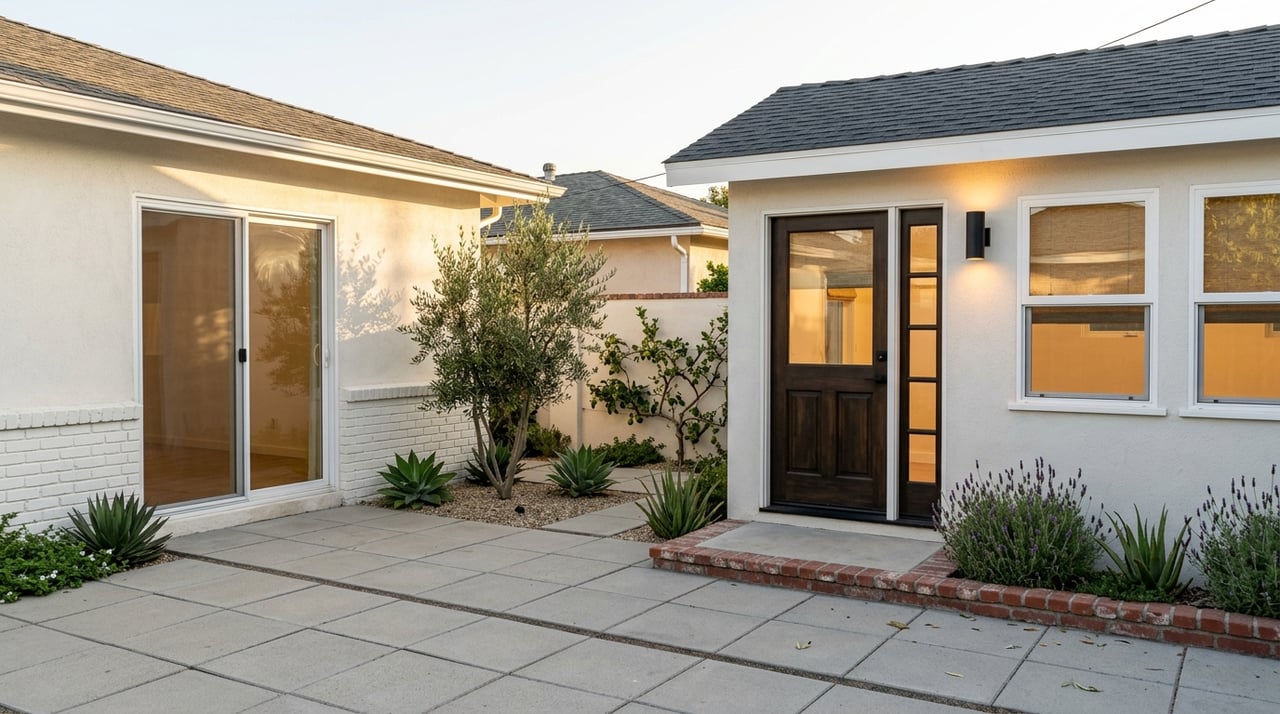
Wondering whether a Woodland Hills property could do more for you than just serve as a primary home? If you are buying, selling, or holding a home in this part of Los Angeles, ADU potential and rental flexibility may already be part of the conversation. The good news is that Woodland Hills has the kind of housing stock and price profile that often makes this worth exploring, and this guide will help you understand what matters most before you make a move. Let’s dive in.
Why ADUs matter in Woodland Hills
Woodland Hills tends to function more like a detached-home market than a dense rental district. In ZIP code 91364, Census Reporter estimates 10,870 housing units, with 71% owner occupancy among occupied units and 77% made up of single-unit structures. That matters because ADUs often fit most naturally into neighborhoods where single-family lots already make up a large share of the housing stock.
The area also sits in a high-value segment of the market. Typical home values in Woodland Hills are around $1.21 million, and Zillow reports homes go pending in about 23 days. That combination can make buyers and owners think carefully about how to create more flexibility from a single property.
On the rental side, Apartments.com reports an average rent of $2,438 per month in Woodland Hills. Reported averages include about $1,917 for studios, $2,438 for one-bedrooms, $3,158 for two-bedrooms, and $5,801 for houses. Even with rents reported down 3.2% year over year as of July 2026, the gap between home values and rental pricing is still one reason ADUs come up so often in local real estate conversations.
What an ADU means in Los Angeles
The City of Los Angeles describes an ADU as a secondary residential unit on a property with a proposed or existing home. California HCD also frames ADUs and JADUs as an effective way to add housing. In practical terms, that means an ADU can create another living space on the same parcel rather than requiring a separate property purchase.
For many Woodland Hills owners, that flexibility is the real appeal. An ADU may support multigenerational living, create space for renters, or simply make a property more versatile in the future. For buyers, it can also open the door to homes that may serve more than one long-term need.
Why Woodland Hills homes are often good candidates
A large reason ADUs fit the Woodland Hills story is the local housing mix. Because the area includes a high share of owner-occupied, single-unit homes, many properties already have the lot patterns and layout characteristics that make secondary units worth evaluating. That does not mean every parcel will work, but it does mean the neighborhood often gives you a better starting point than a denser apartment-heavy area.
In general, detached single-family parcels with a usable rear yard, side access, and enough privacy for a second unit tend to be the most promising candidates. In Woodland Hills, those features can matter even more because buyers often want the ADU to feel distinct from the main home. Privacy, separation, and ease of access can shape both usability and market appeal.
What to check on the lot first
If you are evaluating ADU potential, parcel-specific due diligence matters more than broad assumptions. Los Angeles code says ADUs are generally permitted in residential zones, but some lots in both a Very High Fire Hazard Severity Zone and a Hillside Area face restrictions unless specific exceptions are met.
One hillside exception noted by the Bureau of Engineering requires an improved street width of at least 20 feet along the frontage. That means two homes on the same street can have very different ADU potential depending on their exact site conditions. In Woodland Hills, where hillside conditions can come into play, this is especially important to verify early.
Another local consideration is environmental exposure. Redfin and First Street rate Woodland Hills as having moderate wildfire risk and moderate heat risk. Those factors can influence design decisions, insurance discussions, and how comfortable a future occupant may feel using the space year-round.
Size, height, and parking basics
Before you start imagining a full guest house or large rental unit, it helps to know the practical limits. Los Angeles code caps detached ADUs at 1,200 square feet and generally limits detached ADU structures to two stories. That creates a useful framework for buyers and sellers trying to picture what a realistic project might look like.
Parking rules can also affect feasibility. According to LADBS, parking is not required for new ADUs within a half-mile walk of public transit. LADBS also notes that if covered parking is removed to make room for the ADU, it does not have to be replaced.
These details can make a meaningful difference on tighter lots. A parcel that seems challenging at first glance may become more workable once parking and placement rules are reviewed carefully. On the other hand, a property with obvious yard space may still face constraints tied to access, slope, or hazard overlays.
How ADUs connect to rental potential
When people talk about ADUs in Woodland Hills, they are often really talking about flexibility. In a market where average apartment rents range from about $1,917 for studios to $3,158 for two-bedrooms, and houses average $5,801, a well-executed secondary unit may broaden how a property can be used and marketed.
That does not mean an ADU guarantees strong returns. Rental potential depends on the quality of the unit, how private it feels, whether access is convenient, and how the overall property functions as a whole. A detached unit with thoughtful separation may be viewed very differently from a cramped conversion with awkward circulation.
For some owners, the value is not strictly monthly income. It may be the ability to offset carrying costs, host extended family, create a work-live option, or make the property more appealing to future buyers who want choices. In Woodland Hills, that flexibility is often the strongest part of the ADU story.
What buyers should look for
If you are buying with ADU potential in mind, it helps to stay disciplined and practical. A property does not need to be perfect on day one, but it should offer a believable path to feasibility based on the lot and local rules.
Key things to evaluate include:
- Lot layout and usable outdoor space
- Side or rear access for a second unit
- Separation and privacy from the main home
- Hillside or fire hazard conditions
- Street frontage and access constraints
- Parking and transit proximity
- Existing structures that may affect placement
If the home already has an ADU, ask whether it is permitted and how it was built. A second unit that exists physically is not the same as a second unit that has been completed with the right approvals. That distinction can affect financing, insurance, resale positioning, and buyer confidence.
What sellers should highlight
If you are selling a Woodland Hills property with an ADU or clear ADU potential, the goal is to present the opportunity accurately and strategically. Buyers respond well to flexibility, but they also want clarity. The more specific and credible the story, the stronger the property usually presents.
For a completed ADU, important points may include:
- Whether the unit is permitted
- Approximate size and configuration
- Access and privacy features
- Parking and transit context
- How the unit relates to the main home
- Any known site conditions that affect use
For undeveloped ADU potential, avoid overpromising. The strongest positioning usually frames the property as one that may be worth exploring further rather than claiming guaranteed income or guaranteed buildability. In a high-value market like Woodland Hills, sophisticated buyers tend to appreciate facts over hype.
How to think about value realistically
An ADU does not automatically create value just because it exists. In real-world resale, the upside usually depends on execution and fit. A permitted, well-designed unit with privacy and good access may strengthen a property’s appeal, while a poorly integrated add-on may do much less.
That is why the best way to evaluate ADU potential is not as a blanket formula, but as a strategic property feature. In Woodland Hills, the local mix of detached housing, owner occupancy, and relatively high home values makes ADUs especially relevant. Still, every conclusion should be tied back to the specific parcel, the applicable City of Los Angeles rules, and the quality of the finished result.
A smart next step for Woodland Hills owners and buyers
If you are comparing homes, preparing to sell, or looking at ways to increase flexibility from a property you already own, ADU potential deserves a closer look in Woodland Hills. The opportunity can be meaningful, but the details matter. A strategic review of lot conditions, city rules, and market positioning can help you decide whether an ADU is simply an idea or a real advantage.
If you want a clear, data-informed read on how ADU potential may affect a Woodland Hills property, schedule a free consultation with Bruce Barz.
FAQs
What does ADU potential mean for a Woodland Hills home?
- It means a property may have the physical layout and zoning context that make a secondary residential unit worth exploring, but feasibility depends on the specific parcel and City of Los Angeles requirements.
Are ADUs allowed on all Woodland Hills properties?
- No. ADUs are generally permitted in residential zones, but some lots in both a Very High Fire Hazard Severity Zone and a Hillside Area have restrictions unless specific exceptions are met.
How large can a detached ADU be in Los Angeles?
- Los Angeles code caps detached ADUs at 1,200 square feet and generally limits detached ADU structures to two stories.
Do Woodland Hills ADUs always need parking?
- Not always. LADBS says parking is not required for new ADUs within a half-mile walk of public transit, and covered parking removed for an ADU does not have to be replaced.
Can an ADU increase rental potential in Woodland Hills?
- It can improve flexibility and may support rental use, but rental results are not guaranteed and depend on the unit’s design, privacy, access, permitting, and overall fit with the property.
What should Woodland Hills buyers verify before buying for ADU potential?
- Buyers should review lot layout, access, hillside and fire hazard conditions, parking context, and whether any existing ADU is properly permitted before relying on the property’s future use.